Advanced interview quality, how to design interviewer training with agents
Agentria's interview simulation agents allow interviewers to practice, and then evaluate the quality of the questions based on company criteria.

Better Questions Make Better Hires
The interview is the most consequential step in any hiring process. And the quality of an interview comes down to the quality of the questions asked. Yet remarkably little attention has been paid to whether interviewers are actually asking good questions.
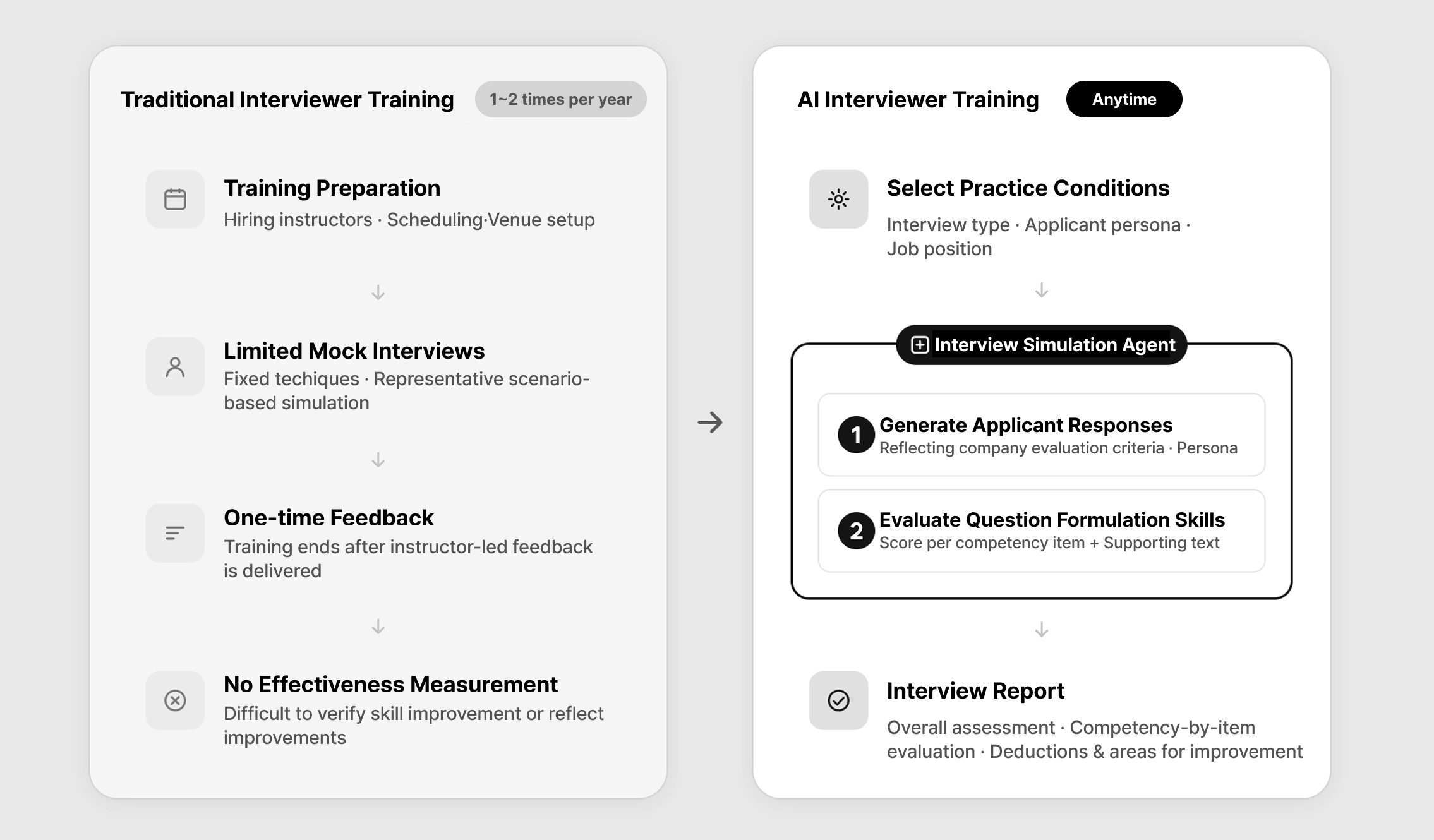
Traditional interviewer training is built around teaching people how to conduct an interview. A facilitator walks participants through interview methodology, followed by a brief role-play exercise. But both during and after the training, interviewers have little opportunity to evaluate whether their own questions are actually good ones. Three fundamental limitations emerge from this model.
- Limited practice opportunities. Organizing a single training session requires coordinating instructors, aligning schedules, and securing a venue. The overhead involved means interviewers rarely get the chance to practice with any frequency.
- Fixed scenarios. Role-play exercises tend to revolve around the same interview formats and similar candidate personas. Interviewers have little opportunity to encounter the range of candidates and unexpected situations they will face in real interviews.
- No clear measurement criteria. There is no consistent standard for evaluating what questions an interviewer asks or whether those questions align with the intended assessment criteria. And without a way to measure performance, improvement is difficult to achieve.
The result: interviewers walk into interviews without any reliable way of knowing — even to themselves — whether they are asking genuinely good questions.
Interviewers Validate Their Own Questions
The agent becomes the candidate
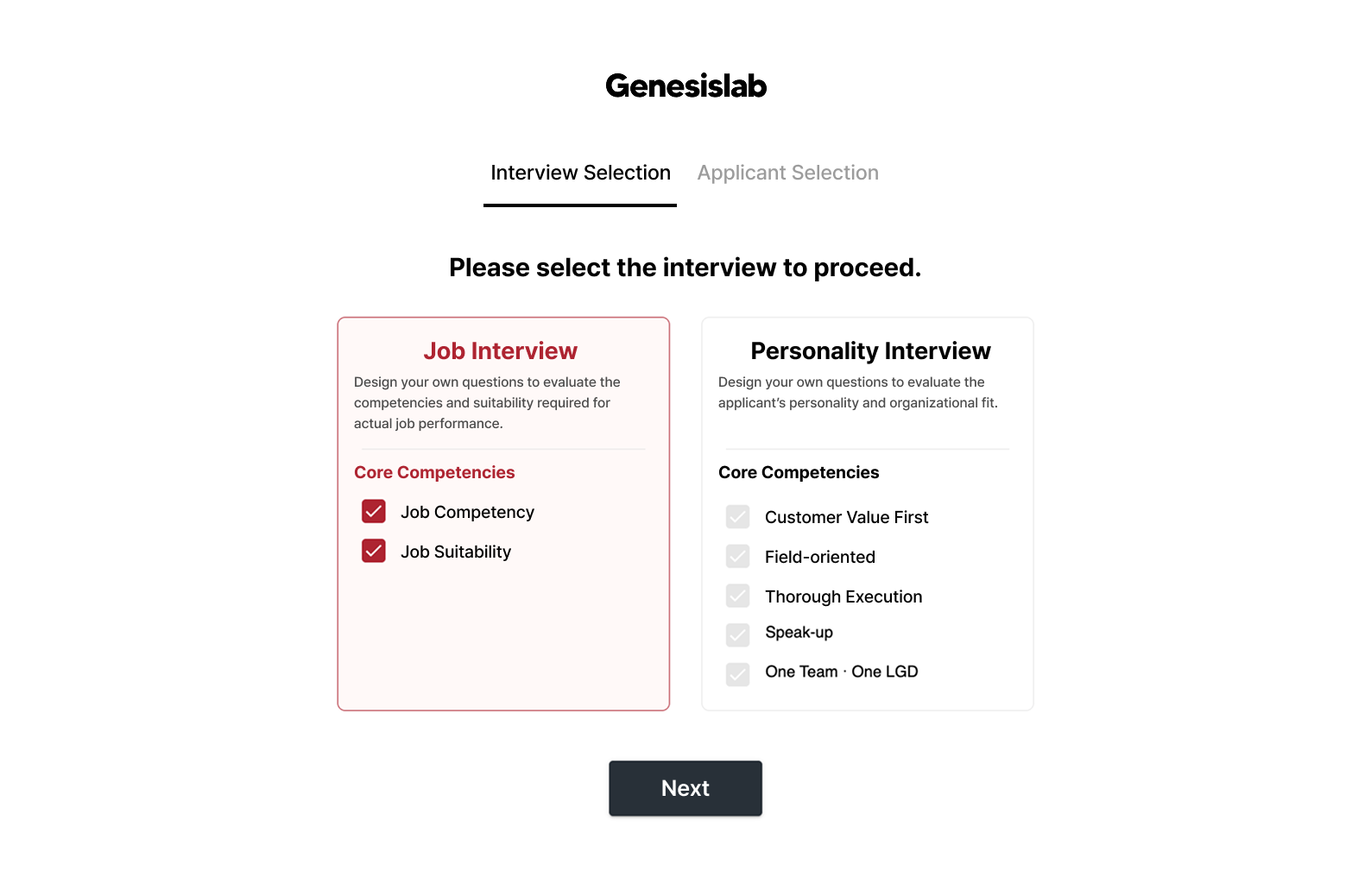
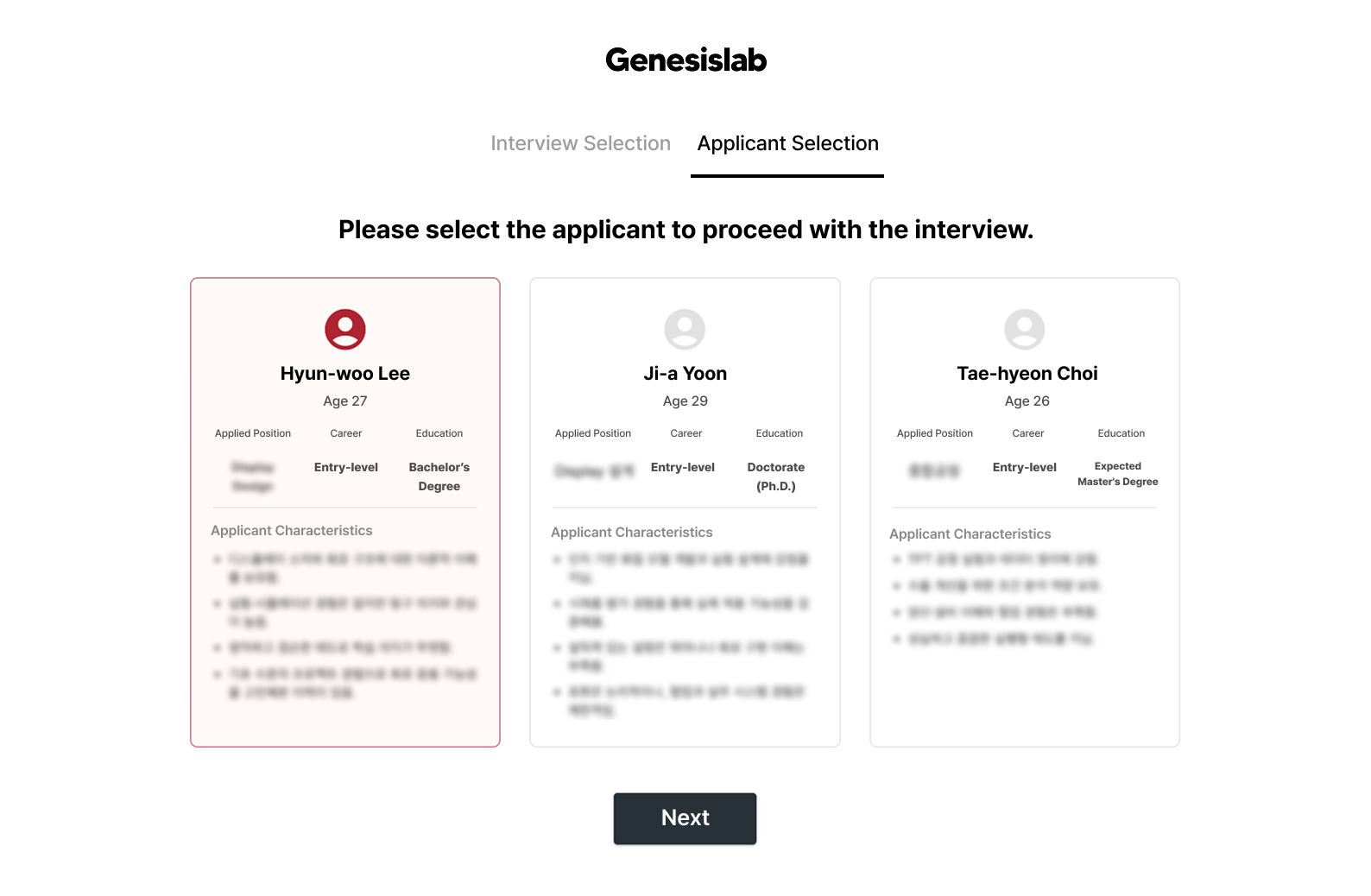
The interview simulation agent, built on Agentria, puts interviewers in control of their own practice environment. They select the interview format, the candidate persona, and the session length — and the agent responds as a candidate matching those exact conditions.
No instructor needed. No scheduling required. Interviewers can begin a practice session by chat, whenever and wherever they are ready. Change the combination of settings, and the scenario changes entirely. Through competency-based interviews, experience-based interviews, and a wide range of candidate personas, interviewers can encounter the kinds of situations they will actually face — before they face them.
Questions are evaluated against real assessment criteria
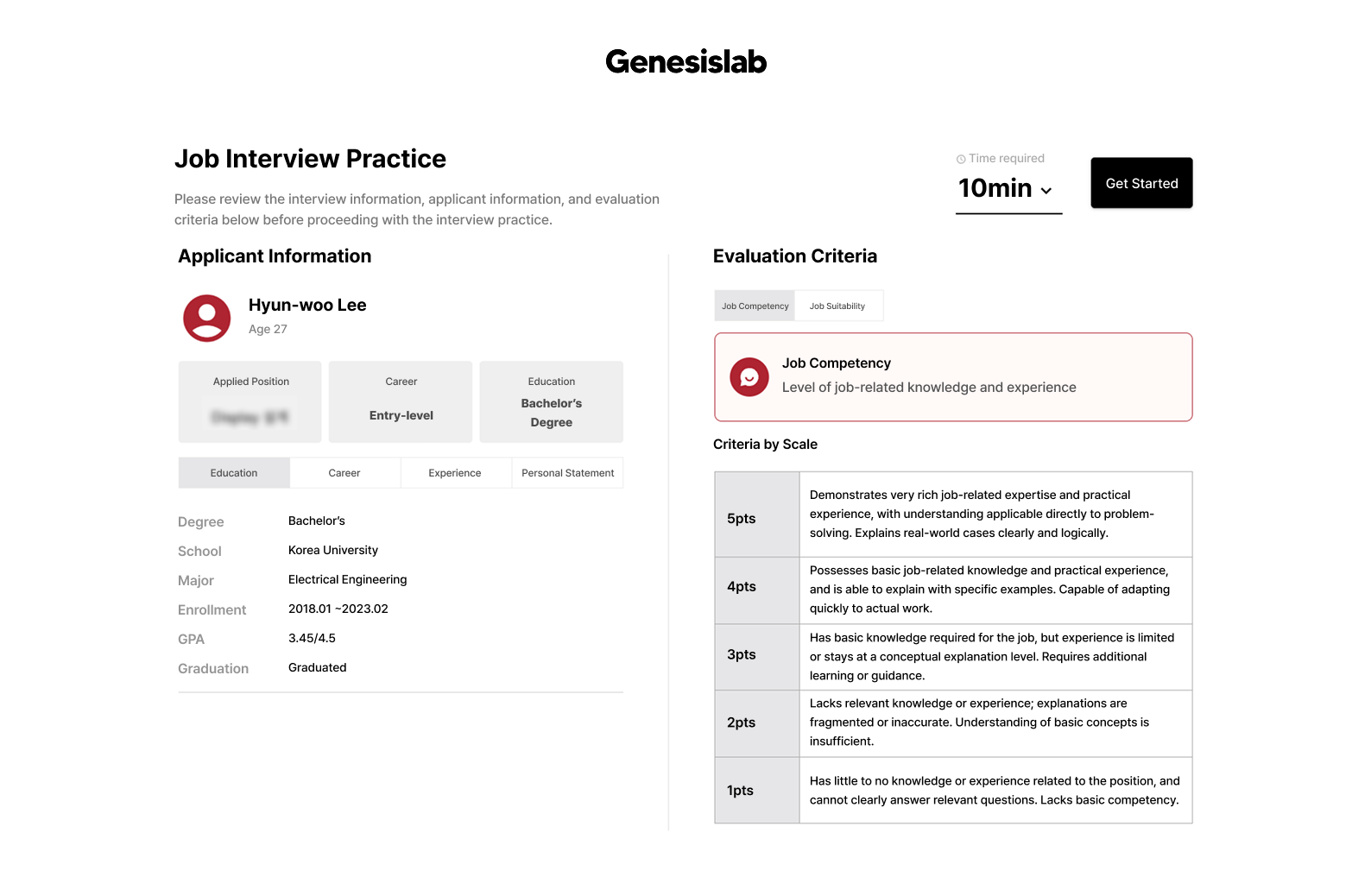
When a practice session ends, the agent delivers a full evaluation. It shows how the questions the interviewer asked measured up against the criteria for that interview format — broken down by competency area, with scores and written rationale for each.
The agent does not simply return a score. It explains the reasoning behind it: whether a question was well-suited to assessing the relevant competency, and where it fell short of the standard. For the first time, interviewers are able to see their own questioning ability reflected back to them through an objective lens.
This is where the approach differs fundamentally from conventional training. The message is not "here is how you should run an interview." It is "here is what your questions actually look like." By shifting the focus of interviewer development to the quality of the questions themselves, training becomes sharper and more effective.
Practice against your organization's own standards
Practice only has value when it connects to the criteria your organization actually uses. The simulation agent is configured to reflect your company's interview formats and competency evaluation framework — making every session a rehearsal grounded in real standards, not generic best practices.
When those standards change, the agent can be updated directly. Subject-matter experts within your organization can add relevant scenarios and refine the criteria over time. This means interviewer training no longer needs to depend on external providers — it can be owned and maintained internally.
Great hiring comes from great interviews. Great interviews start with great questions. When interviewers have a clear, objective way to assess whether their questions are genuinely good ones, the conditions for better hiring are finally in place.

