
The Craft of Multi-Agent Collaboration Design
싱글 LLM의 한계를 넘어서는 멀티에이전트 시스템(MAS)은 단순한 역할 분담이 아니라, 구조·협업·커뮤니케이션 설계를 통해 창발적 지능을 만들어내는 아키텍처다. 이 글은 토폴로지, 협업 전략, 동적 오케스트레이션, 커뮤니케이션 프로토콜 등 실제 프로덕션 환경에서 MAS를 설계할 때 필요한 핵심 기술과 트레이드오프를 구체적으로 다룬다.
싱글 LLM의 한계를 넘어서는 멀티에이전트 시스템(MAS)은 단순한 역할 분담이 아니라, 구조·협업·커뮤니케이션 설계를 통해 창발적 지능을 만들어내는 아키텍처다. 이 글은 토폴로지, 협업 전략, 동적 오케스트레이션, 커뮤니케이션 프로토콜 등 실제 프로덕션 환경에서 MAS를 설계할 때 필요한 핵심 기술과 트레이드오프를 구체적으로 다룬다.

technology
A single LLM quickly hits its limits on complex business problems. This article traces AI architecture evolution — from single prompts to multi-agent systems — and explores what multi-agent scaling laws mean for B2B platform design.

technology
A psychiatrist rating "It's tough, but manageable" as 3/3 relies on reasoning that post-hoc labeling often loses. A joint study by Genesis Lab, UNIST, and Seoul National University Hospital, presented at IASDR 2025, shows how interface design can capture that reasoning as training data.

research
Video interview models now decide who advances, and bias rides through the score. Existing fair-ML assumed binary labels and tabular inputs — neither fits AVI. A Genesis Lab–coauthored IEEE Access (2023) paper makes fairness a Wasserstein regularizer on continuous scores, with λ_W as the knob.

technology
This paper proposes a confidence-based noisy label filtering combined with pseudo-labeling SSL, demonstrating strong performance on noisy data and rare positive case detection, ultimately achieving an AUROC of 0.9993 on the off-site validation set.

technology
This paper proposes an attentive mode variational LSTM that disentangles task-relevant and task-irrelevant features, achieving state-of-the-art on facial expression and action recognition.
technology
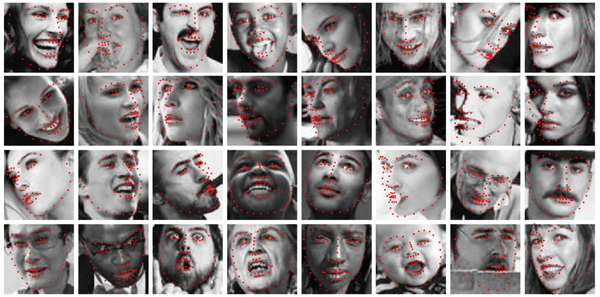
This paper demonstrates that adversarial training with facial geometric information effectively improves FLD performance, and presents a simple yet effective architecture that enables landmark extraction using only the encoder at test time.

technology
This paper proposes a spatial frequency domain critic with an alternating training strategy, effectively preserving age and gender information in generated images and outperforming existing methods.